
Every parcel
Recorded from its supplier to the bill of lading.
Traceability
We run our own traceability system. It records the supplier and site of every parcel we trade, follows it to the bill of lading and keeps its documents in one record.
[Photo to replace: a laboratory bench with lot-labelled sample bottles, or a surveyor drawing a sample at loading]
Our approach
Our customers are increasingly asked to document the source of what they buy. We built our own traceability system to help them answer.
Because the record starts at purchase, each document you receive can be traced to identified lots.
Recorded from its supplier to the bill of lading.
Analysis, survey and shipping documents, held together.
Developed and run by our own team.
[System name, the year it went into use, and what it records beyond the steps shown below: to confirm. This is where the page can show what sets the system apart.]
How it works
Our other products are bought from refineries, processing plants and collectors across Southeast Asia, so the record begins with the supplier we buy from.
Our records identify the immediate supplier and site of every parcel.
We record who we bought each parcel from: the refinery, plant or collector, and its site.
On record: Supplier and site
Each parcel is recorded by lot, and each lot is given a reference that links it to its supplier, analysis and shipping documents.
On record: Lot reference, product and quantity
The lot is analysed, and its certificate of analysis is added to the record.
On record: Certificate of analysis
At the load port, an independent surveyor certifies the weight and quality of each shipment.
On record: Survey certificates
The bill of lading and shipping documents complete the record for your shipment.
On record: Bill of lading and shipping documents
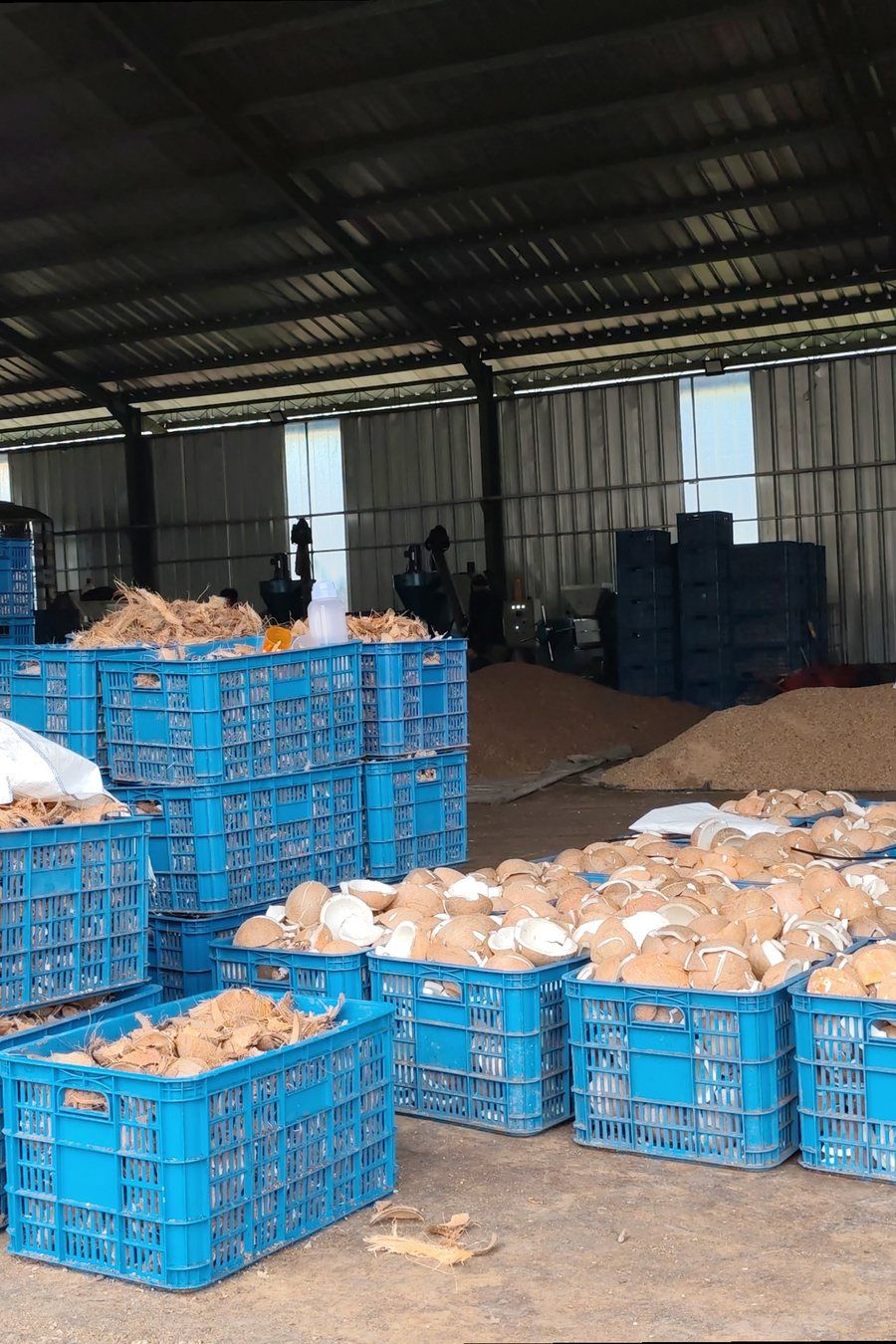
The crude coconut oil we sell comes from a copra-pressing plant in Bandar Lampung, Sumatra, that supplies its entire oil output to us. Here the record begins earlier, with the plant’s records of the copra it receives.
The plant weighs and inspects copra on arrival, and records each delivery against its supplier.
On record: Supplier, weight and condition
The copra is pressed, and the oil is stored and recorded by lot.
On record: Lot reference and quantity
The lot is analysed, and its certificate of analysis is added to the record.
On record: Certificate of analysis
At the load port, an independent surveyor certifies the weight and quality of each shipment.
On record: Survey certificates
The bill of lading and shipping documents complete the record for your shipment.
On record: Bill of lading and shipping documents
[Steps and record contents drafted from the buyers’ deck. Confirm against the system.]
Example
Each parcel has a single record. It names the supplier, follows each lot through analysis and loading, and holds the documents issued along the way.
When a question about a parcel comes up, the record is already on file.
[Record fields are illustrative. Replace with the fields the system holds, and confirm whether buyers can view a record or receive an extract.]
Documentation
Each shipment comes with the documents named in your contract, drawn from the set below. Technical and safety data sheets are available for each product.
Issued by
For each lot. Tested to ISO, AOCS or ASTM methods, as the product requires.
Producer, with Genco Oil
Issued by
Weight and quality, at the load port.
Independent surveyor
Issued by
From the load port.
Carrier
Issued by
Seller
[Certificate of origin: whether supplied, and by which authority, to confirm]
Issued by
Issued where you require one, the material is in scope and its supply chain is certified.
ISCC certificate holder
Issued by
On CIF terms.
Insurer
Certification
Whether a shipment can carry an ISCC sustainability declaration depends on the material and whether its supply chain is certified, so we confirm this for your product and destination before contract. Both certificates can be checked in the ISCC certificate register.
Certificate no.
EU-ISCC-Cert-LV227-00001039
[Holder, scope and validity dates: to confirm]
Certificate no.
ISCC-PLUS-Cert-LV227-00001040
[Holder, scope and validity dates: to confirm]
Regulatory status
Rubber seed oil is recognised as an Annex IX Part A feedstock in Portugal. Recognition is pending in France and the Netherlands (status at October 2026). [Authority, date and Part A entry: to confirm]
For buyers
We are glad to support your procurement, quality and compliance teams in approving a new supplier and product.
The documents from a recent shipment, with commercial and supplier details removed, so that you know what to expect.
[Photo: a redacted document set on a desk: certificate of analysis, survey certificate and bill of lading, names and numbers blurred]
Details of the immediate supplier of the parcel we are offering.
[Whether, when and on what terms supplier details are disclosed: to confirm]
Whether a shipment to your destination can carry a sustainability declaration, confirmed before contract.
Contact
Ask us for a sample document set, and we can send you the analysis, survey and shipping documents from a recent shipment, with commercial and supplier details removed.